Diving Isla Desecheo
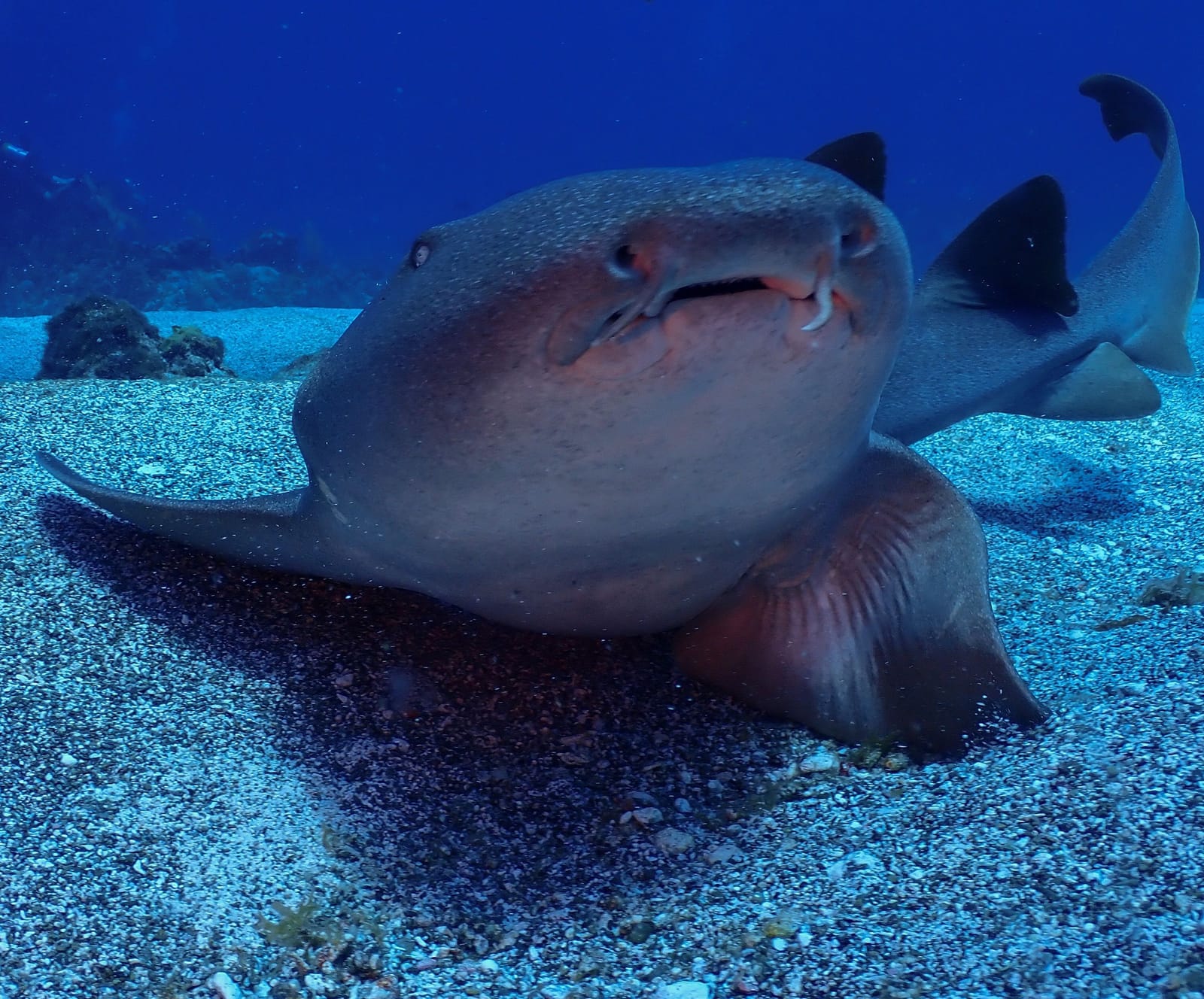
© Puerto Rico Dive Sites, all rights reserved
Desecheo is a small uninhabited island about 12 miles off Puerto Rico's west coast. The island is a closed federal wildlife refuge because of unexploded ordnance; the half mile of water around it is a DRNA no-fishing marine reserve that divers visit by boat.
Rules, fees and seasons change. Confirm with DRNA, USFWS and your operator before you go. (Checked 2026-10-13)
Overview
- Desecheo is a rugged, uninhabited island of about 360 acres (146 hectares) in the Mona Passage, about 12 to 13 miles west of Punta Higüero (Rincón). [1][2][3]
- The land is the Desecheo National Wildlife Refuge, run by the U.S. Fish and Wildlife Service. [1][2]
- The surrounding waters are not part of the refuge: Law 57 of 2000 made half a mile of water around the island a marine reserve, managed by DRNA. [4][5]
- The military used Desecheo for bombing and survival training from 1940 to 1964, and live munitions are still present. [2]
Who manages it and the rules
- The refuge is closed to the public because of unexploded military ordnance; any future access depends on cleanup and certification that it is safe. [5]
- Visits to the surrounding waters are regulated by DRNA, not by the refuge. [5]
- Fishing is prohibited within a half-mile perimeter around Desecheo. [6][2]
- NOAA's inventory lists the marine reserve as no-take with anchoring restricted, and the refuge as no access with anchoring prohibited. [7]
- Law 57 provides for mooring buoys to avoid anchor damage; DRNA's buoy inventory lists 4 buoys at Desecheo (surveyed 2007-2011), which may have changed. [4][8]
- DRNA mooring buoys are public and first come, first served, for boats up to 60 feet; under Law 147-1999 (Art. 10), anchoring outside buoys in a buoyed reef area can get you fined. [9][10]
- NOAA notes that Desecheo has no anchorages along its shores. [3]
Permits
Getting there
- The only way to dive Desecheo is by boat; the refuge is reachable only by boat or helicopter. [2]
- Trips leave from the west and northwest coast (sources mention Rincón and Aguadilla); a trip report (page updated in 2026) describes a ride of about 45 minutes from Rincón, with the return often rougher. [11][12]
- One operator's trip is two tank dives, about 4 hours in total. Several west-coast operators run trips; see the dive shops directory. [12]
- The Mona Passage has tidal and wind-driven currents and heavy squalls, especially in summer. [3]
What the diving is known for
- USFWS says the waters around Desecheo hold some of the best-developed and healthiest coral reefs in Puerto Rico. [2]
- Law 57 named South Gardens, Candelstick, North Side Tunnels, Yellow Reef, Sponge Valley, Cable Reed and Puerto de Botes as places to consider for mooring buoys. [4]
- Dive sources describe clear water (about 80 feet on one 2026 trip), spur-and-groove reefs with sea fans, and shallow caves and swim-throughs. [11][13]
- One operator asks for Open Water certification, comfort diving to 100 feet and boat-diving experience. [12]
Safety
- A 1974 Navy survey found unexploded ordnance on Desecheo and in adjacent waters; NOAA urges extreme caution in the area. [3]
- If you see something that may be a munition, follow the 3Rs: recognize it, retreat without touching it, and report it. [14]
- A 2023 federal review covers Army Corps underwater investigation and cleanup of munitions in and around Culebra and Desecheo. [15]
- Never go ashore: besides ordnance, the island has hazardous terrain and no permanent fresh water. [2][1]
Before you go
- Plan to stay on the boat and in the water; landing on the island is not allowed. [5]
- Leave spearguns and fishing gear at home: no fishing is allowed in the reserve. [6]
- Ask your operator about any fees, the sea forecast, certification requirements and their emergency plan. [11][12]
- Do not touch anything that could be a munition; leave the way you came and report what you saw and where. [14][3]
Dive sites
Sources
- Desecheo National Wildlife Refuge — U.S. Fish and Wildlife Service (accessed 2026-10-11)
- Desecheo National Wildlife Refuge Comprehensive Conservation Plan (September 2012) — U.S. Fish and Wildlife Service, Southeast Region (accessed 2026-10-11)
- U.S. Coast Pilot 5, Chapter 13 (Puerto Rico), weekly edition 11 Oct 2026, paragraphs 68-89 — NOAA Office of Coast Survey (accessed 2026-10-13)
- Ley de la Reserva Marina alrededor de la Isla Desecheo (Ley Núm. 57 de 10 de marzo de 2000), OGP compilation rev. 15 abril 2024 — Oficina de Gerencia y Presupuesto, Gobierno de Puerto Rico (accessed 2026-10-11)
- Desecheo National Wildlife Refuge - Visit Us — U.S. Fish and Wildlife Service (accessed 2026-10-11)
- Reglamento de Pesca de Puerto Rico - 2010 (Reglamento Núm. 7949), Art. 8.7-8.8 and Figures 8, 9a-9c — Departamento de Recursos Naturales y Ambientales (DRNA) (accessed 2026-10-11)
- NOAA Marine Protected Areas Inventory 2024 (Puerto Rico) — NOAA National Marine Protected Areas Center (accessed 2026-09-25)
- Boyas de Amarre (layer pr_mooringbuoys2): inventory of DRNA-installed mooring buoys — Departamento de Recursos Naturales y Ambientales (DRNA), ArcGIS Online (accessed 2026-09-25)
- Programa de Boyas de Amarre Ecológicas (brochure) — Departamento de Recursos Naturales y Ambientales (DRNA) (accessed 2026-10-13)
- Ley para la Protección, Conservación y Manejo de los Arrecifes de Coral en Puerto Rico, Ley Núm. 147 de 15 de julio de 1999, según enmendada (Art. 10) — Oficina de Gerencia y Presupuesto, Gobierno de Puerto Rico (accessed 2026-10-13)
- Desecheo Island - SCUBA Diving and Snorkeling - Rincon — Puerto Rico Day Trips (accessed 2026-10-13)
- Desecheo Island Trips — Aquatica Underwater Adventures (accessed 2026-10-11)
- Discover Paradise: The Ultimate Dive Guide for Scuba Diving in Puerto Rico — SSI (Scuba Schools International) (accessed 2026-10-11)
- Explosives Safety - the 3Rs (Recognize, Retreat, Report) — U.S. Department of Defense (DENIX) (accessed 2026-10-11)
- ESA Section 7 programmatic biological opinion: USACE underwater investigation and cleanup at FUDS in and around Culebra and Desecheo Islands (OPR-2016-00017) — NOAA National Marine Fisheries Service (accessed 2026-10-11)