Diving Isla de Mona (and Monito)
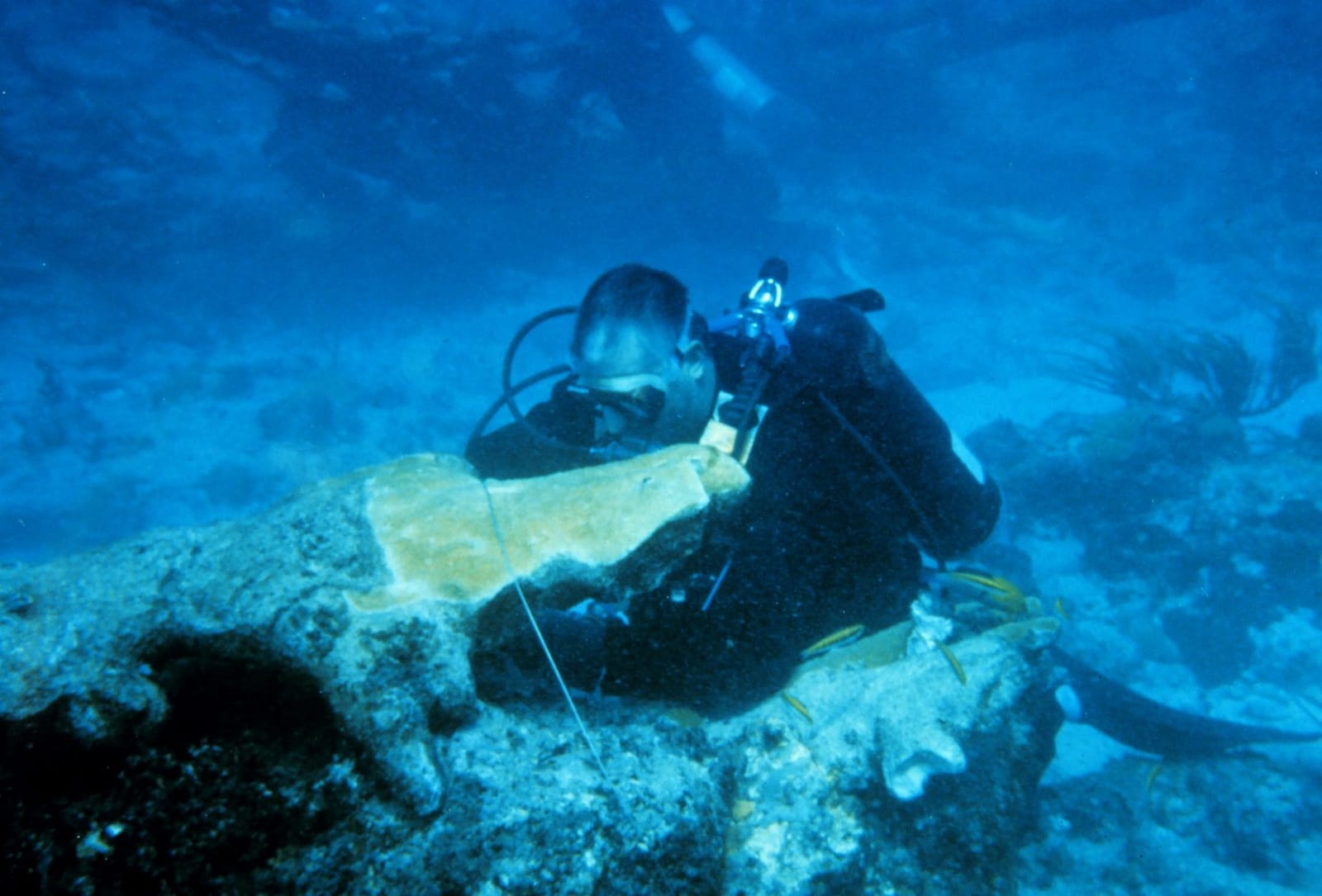
Mona and Monito are a remote DRNA natural reserve in the middle of the Mona Passage. There is no ferry, no facilities and no medical care; divers go by boat with an operator, and landing or camping needs a DRNA permit.
Rules, fees and seasons change. Confirm with DRNA and your operator before you go. (Checked 2026-10-13)
Overview
- Isla de Mona and Islote Monito make up the Isla de Mona y Monito Natural Reserve, managed by Puerto Rico's Department of Natural and Environmental Resources (DRNA). [1]
- Mona lies in the middle of the southern Mona Passage and is about 6 miles long and 4 miles wide; Monito is a bare rock about 3 miles to its northwest. [2]
- Mona was designated a natural reserve in 1986, and its surrounding waters were designated critical habitat in 1998. [1]
- Only DRNA staff (and, per NOAA, a state police detachment) live on the island. [3][2]
Who manages it and the rules
- DRNA manages the reserve on land and at sea; NOAA's inventory classifies it as zoned with no-take areas, with anchoring restricted. [1][4]
- Puerto Rico's fishing regulation bans fishing within a 1-mile perimeter around Mona and Monito, except shore fishing with line and one hook in two zones (Playa Sardinera and Playa Pájaros). [5]
- Anywhere in the reserve, only hook and line is allowed; spearguns, traps, nets, longlines and aquarium-fish collecting gear are prohibited. [5]
- DRNA does not allow spearfishing (figa) at Sardinera and will hold any spearfishing gear until the end of your visit. [6]
- The waters out to 3 nautical miles around Mona and Monito are federal critical habitat for the hawksbill sea turtle. [7][2]
- DRNA's buoy inventory lists 12 mooring buoys at Mona (surveyed 2007-2011); some may be missing now. [8]
- DRNA mooring buoys are public and first come, first served, for boats up to 60 feet; they may not be used in winds over 40 mph or to ride out storms. [9]
- Under Law 147-1999 (Art. 10), anchoring outside the buoys where buoys mark a reef area can get you fined by DRNA. [10][9]
- Visits to Islote Monito are prohibited except for DRNA-authorized researchers. The DRNA page does not say how this applies to diving in Monito's waters. [6]
- On land: do not hunt, capture, harass or feed wildlife, or cut or remove plants; cave camping and cave excursions are prohibited. [6]
Permits
- Anyone who wants to visit the reserve needs a prior permit to camp, move around (transitar), fish or hunt. [3]
- Camping permits: reserve by phone with DRNA's Land Use and Forest Permits Section at least 5 business days ahead, then finish the paperwork and payment at a DRNA office within 24 hours (procedure as posted, checked 2026-10-11). [6]
- DRNA lists camping at $10 per person per night, only at Playa Pájaros (50 people) and Playa Sardinera (60 people) (as posted, checked 2026-10-11; confirm with DRNA). [6]
- A travel guide reports that boaters need a one-day DRNA permit to go ashore above the high-tide line; confirm with DRNA. [11]
- We found no DRNA page describing a permit for diving from a boat without landing. Ask DRNA and your operator before you go. [1][6]
Hunting season and closures
- DRNA runs a goat and wild pig hunting season on Mona, described as December to March and lasting 16 weeks. [12]
- The last notice (2024–25) set bow hunting from December 2 to 27, 2024 and shotgun or bow hunting from January 13 to April 14, 2025, Monday to Thursday, 6 a.m. to 6 p.m. In February 2025 DRNA temporarily suspended hunting permits during the search for a missing hunter. Check DRNA for this season's dates (no newer notice was posted when we checked, 2026-10-13). [13][14][12]
- Hunting notices say cave entry and excursions are not allowed and the airstrip may not be used during the season. [13][15]
- Access can change: in June 2025, after conflicting reports, a transport operator said visitor trips had resumed, while DRNA's secretary said the reserve had never closed. [16]
Getting there
- There is no public ferry or flight. The airstrip is used mainly by DRNA aircraft, and by other agencies in emergencies. [3]
- Visitors go by boat from Puerto Rico's west coast (travel sources name Mayagüez and Boquerón). Several west-coast operators run trips; see the dive shops directory. [17]
- Travel sources put the crossing at about 3 to 9 hours each way, depending on the boat and sea state; many groups sleep aboard. [11][17]
- NOAA reports a current of up to 3.5 knots north of Mona and warns of heavy squalls in the passage, especially in summer. [2]
- In NOAA's climate table for the passage, waves over 9 feet are most frequent in December and least frequent in May. [2]
- NOAA says temporary anchorage and landing are possible on the south and west sides in good weather, but on many days they are impracticable; boat landings are at Sardinera and Playa de Pájaros. [2]
What the diving is known for
- DRNA notes 27 species of stony corals plus soft corals, and the Veril del Carabinero, an underwater cliff that drops about 300 feet. [1]
- Deep water is close: NOAA puts the 100-fathom line about 1 mile offshore, and only about 0.3 mile off the southwest side. [2]
- Mona is Puerto Rico's main hawksbill nesting site: DRNA counted 957 of the 1,913 hawksbill nests in all of Puerto Rico as of October 2025. [18]
- Dive sources describe very clear water and sheer walls with sea fans and black coral; some sites have tough conditions best suited to experienced divers. [11][19]
Safety
- There is no lodging, food, drinking water or medical care on Mona, and little or no cell service. [11][17]
- Visitors must take their trash back to Puerto Rico; DRNA is not responsible for losses from fire, theft, negligence or natural events. [6]
- Stay away from cliff edges; rappelling and climbing are prohibited. Fireworks and explosives are banned; flares are allowed only for emergencies. [6]
- People get lost on Mona: in February 2025 a missing hunter was found alive after a search by DRNA, police, emergency management, the Coast Guard and a FURA helicopter. [14]
- NOAA warns that with a strong wind from any direction, swell wraps around the island into all the anchorages. [2]
Before you go
- Confirm with DRNA that the reserve is open and what permits your trip needs (landing, camping, diving). [1][16]
- Check whether your dates fall in the hunting season and what areas are closed. [12]
- Ask your operator about the boat, crossing time, weather cancellations and emergency plan. [17]
- Leave spearguns and collecting gear at home; only hook and line is allowed in the reserve, and only in permitted areas. [5]
- Bring everything you need, including water, and plan to carry all trash back. [11][6]
Dive sites
Sources
- Reserva Natural Isla de Mona y Monito — Departamento de Recursos Naturales y Ambientales (DRNA) (accessed 2026-10-11)
- U.S. Coast Pilot 5, Chapter 13 (Puerto Rico), weekly edition 11 Oct 2026, paragraphs 68-89 — NOAA Office of Coast Survey (accessed 2026-10-13)
- Senado evalúa medidas para rehabilitar pista de aterrizaje en Isla de Mona — Metro Puerto Rico (accessed 2026-10-11)
- NOAA Marine Protected Areas Inventory 2024 (Puerto Rico) — NOAA National Marine Protected Areas Center (accessed 2026-09-25)
- Reglamento de Pesca de Puerto Rico - 2010 (Reglamento Núm. 7949), Art. 8.7-8.8 and Figures 8, 9a-9c — Departamento de Recursos Naturales y Ambientales (DRNA) (accessed 2026-10-11)
- Acampar Isla de Mona — Departamento de Recursos Naturales y Ambientales (DRNA) (accessed 2026-10-11)
- 50 CFR 226.209 - Critical habitat for the hawksbill sea turtle (Mona and Monito Islands) — U.S. Code of Federal Regulations (NOAA Fisheries), via Cornell LII (accessed 2026-10-11)
- Boyas de Amarre (layer pr_mooringbuoys2): inventory of DRNA-installed mooring buoys — Departamento de Recursos Naturales y Ambientales (DRNA), ArcGIS Online (accessed 2026-09-25)
- Programa de Boyas de Amarre Ecológicas (brochure) — Departamento de Recursos Naturales y Ambientales (DRNA) (accessed 2026-10-13)
- Ley para la Protección, Conservación y Manejo de los Arrecifes de Coral en Puerto Rico, Ley Núm. 147 de 15 de julio de 1999, según enmendada (Art. 10) — Oficina de Gerencia y Presupuesto, Gobierno de Puerto Rico (accessed 2026-10-13)
- Mona Island | Isla de Mona — Puerto Rico Day Trips (accessed 2026-10-11)
- Cacería Isla de Mona — Departamento de Recursos Naturales y Ambientales (DRNA) (accessed 2026-10-13)
- Aviso público: Temporada de caza de cabros y cerdos en la Reserva Natural Isla de Mona (2024-2025) — Departamento de Recursos Naturales y Ambientales (DRNA) (accessed 2026-10-13)
- Rescatan con vida a cazador de 65 años desaparecido en Isla de Mona — Metro Puerto Rico (accessed 2026-10-13)
- Aviso público: Temporada de caza de cabros y cerdos en la Reserva Natural Isla de Mona (2023-2024) — Departamento de Recursos Naturales y Ambientales (DRNA) (accessed 2026-10-11)
- Reanudan visitas a Isla de Mona tras versiones encontradas sobre acceso del público — El Nuevo Día (accessed 2026-10-11)
- Isla de Mona Puerto Rico: Private Charter Expeditions & Permit Guide — Charters Puerto Rico (accessed 2026-10-11)
- Isla de Mona concentra la mayor población de tortugas carey en Puerto Rico — Metro Puerto Rico (accessed 2026-10-11)
- Discover Paradise: The Ultimate Dive Guide for Scuba Diving in Puerto Rico — SSI (Scuba Schools International) (accessed 2026-10-11)